

EP LUBE HTHP
- Home
- Product
- DRILLING MUD ADDITIVES
- EP LUBE HTHP
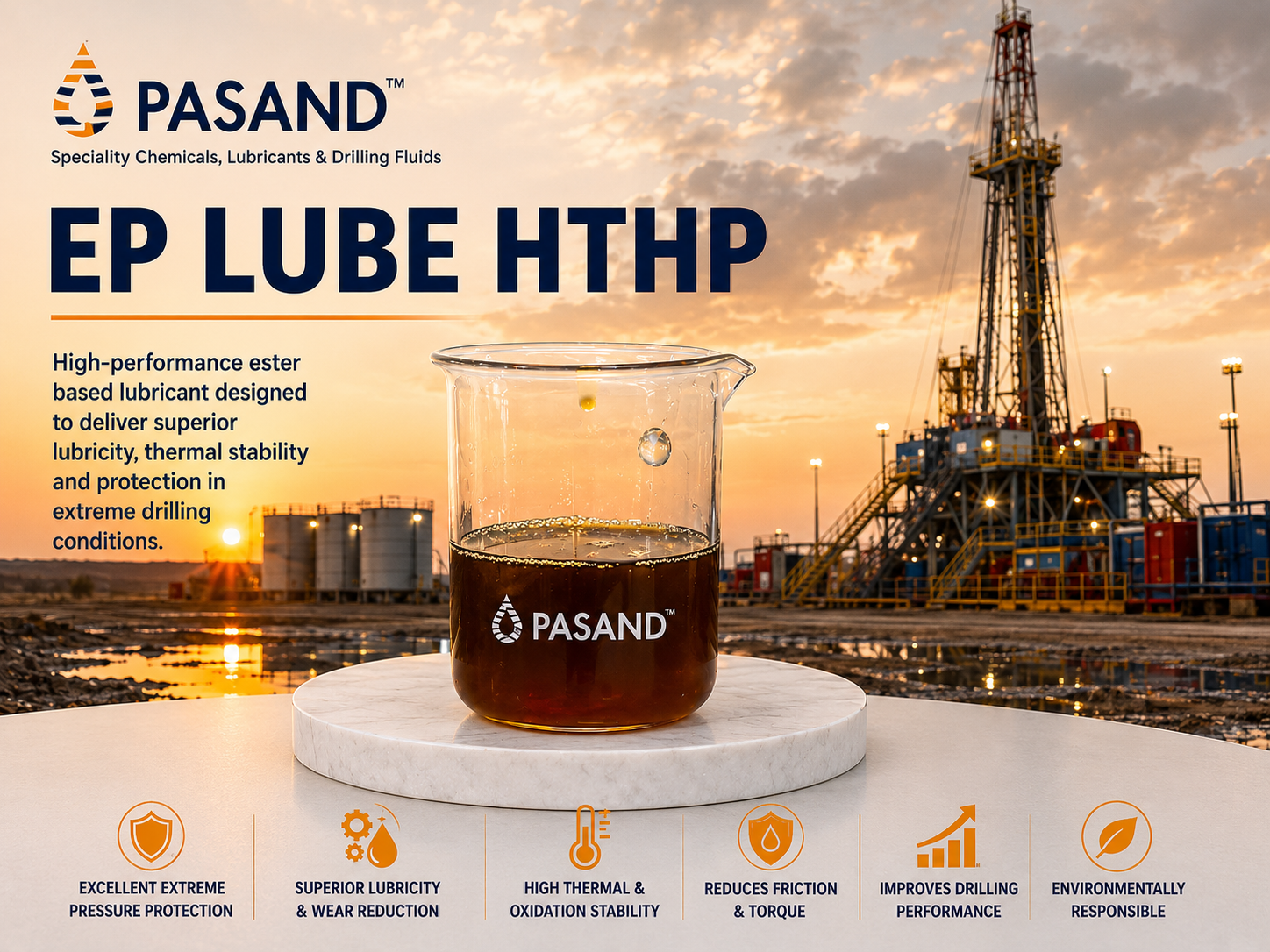
EP LUBE HTHP
Pasand™ EPL400 is a High Temperature High Pressure Extreme Pressure Lubricant. It is nontoxic, bio-de-gradable torque reducer from specialized blend of treated vegetable oils and high molecular glycols. It im-parts high temperature extreme pressure lubricating properties to the drilling fluids and prevents wall sticking. It is formulated for sodium silicate based drilling fluids aiding in minimizing torque drag, differential stick-ing tendencies and shale inhibition. It is used in sodium silicate mud systems for extreme alkaline condition with non-foaming properties.
EP LUBE HTHP Details
Features And Benefits
- It enhances the ROP (Rate of Penetration).
- Maintains lubricating properties at high bottom-hole temperatures (BHT) where standard lubricants lose effectiveness.
- Significantly reduces the coefficient of friction, facilitating smoother drilling in directional and horizontal wells.
- Provides a degree of shale stabilization by coating the reactive clay surfaces.
- Compatible with most water-based mud (WBM) additives, including lignosulfonates and polymers
Application
It is effective in sodium silicate-based drilling fluids without disturbing any properties. It readily emulsifies drilling into the mud systems and reduces torque and drag of the drill string.
Specifications
|
Physical State |
: Blackish Liquid, free form visible impurities |
|
Specific Gravity |
: 0.91 – 0.93 |
|
Foam test Specific Gravity |
: More than 0.85 |
|
pH Value |
: Neutral |
|
Solubility |
: Insoluble in water |
|
Flash Point |
: More than 110°C |
|
Toxicity |
: Non-Toxic |
Packing
Pasand™ EPL100 is packaged in 200 litre or 208 litre HDPE drums. Private labelling and customised packing is also available on request. Store in a dry, well-ventilated area. Keep container closed. Keep away from heat, sparks and flames.
Safety & Handling
Material must be handled as an Industrial chemical, wearing protective equipment and observing the precautions as mentioned in the MSDS